Sandıma – a Bodrum treasure to discover
Sandıma – a Bodrum treasure to discover
Monday, April 4, 2011
CHRIS DRUM BERKAYA
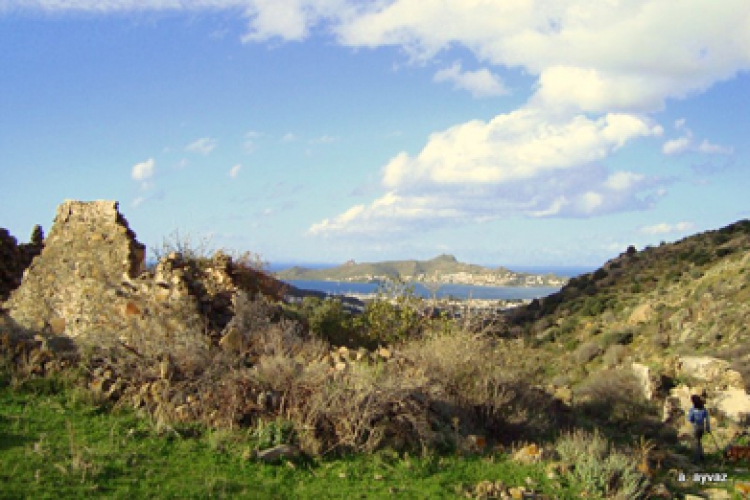
The village has a forlorn quality about it, of untold and lost stories, that slip away between the cracks of the walls, covered by the creeping blanket of weeds and wildflowers reclaiming their territory. But in the mild sunshine, where spring green softens the hard rock it was built on, visitors wander the paths between the buildings, taking an almost childlike delight in examining the old abandoned houses.
The houses are generally old Bodrum-style stone houses; the simple, square-built, flat-roofed buildings with thick walls made of stone packed with soil and small stones are bound by layers of whitewash, while the flat roofs were made up of layers of reeds, grasses, and a special purple red clay taken from the deposits in the hills.
These were a design unchanged for centuries, and the present-day requirements of modern Bodrum houses to be white and square was a far-sighted bylaw put into place in the 1970s to retain a link to these types of houses so characteristic of the peninsula.
The houses were all built with the natural materials found at hand, and they also need a yearly cycle of maintenance to keep them in order; as such, once the occupants leave, the weeds spring up on the flat roofs and begin the breakdown process.
This is the process happening in Sandıma, leaving roofless and windowless houses as the walls have started to crumble. In the sunshine and among the rude vigor of spring flowers, there seems to be an air of resignation.
Living among the stones
But among the abandoned houses, there is one dwelling that is still occupied that openly welcomes visitors to the village.
İsmail Erkoca, a sculptor, and his wife, Nurten Değirmeci, an artist, came from Istanbul to the village seven years ago to take up residence and make their studio and home in the village.
İsmail Erkoca brings trays of small glasses of Turkish, sits in the sun with visitors who knock at the door of Nuriş Sanat Evi (Nuriş Art Gallery) and tells the story of the village at least as far as he knows it.
He refutes the first assumption people many make about the village, namely, that it was one of the Ottoman Greek villages that were abandoned in the 1922 mübadele (population exchange) that saw Greek Orthodox from Turkey sent to Greece and Muslims in Greece sent to Turkey.
He pointed out the style of the houses was very typical of the Turkish Bodrum residents and added that there was no evidence of any old chapels in the area ? a sure sign of past Greek Orthodox residents.
According to Erkoca, there were around 150 houses in the village; as such, the sculptor guessed that the population of the village would have been between 700 and 1,000 at its peak.
The large school building and schoolyard lie ringed by eucalyptus trees at the western end of the village. Erkoca is sure that the rectangular many-windowed building immediately in front of their house was also a school building.
Sandima’s houses are actually clustered in two halves, divided by a quite deep creek bed, with a lovely short waterfall running in spring beside the highest houses. Erkoca said Sandima was actually two villages and that the higher western side of the stream was known as Girelbelen
In his research and according to some notes published on Yalikavak Municipality’s website, Erkoca said the people of Yalikavak were quite a prosperous community owning many sheep and cattle that grazed up on the hills. The lower hillsides were terraced carefully to grow wheat for flour, vegetables, olives and figs. Contrary to other peninsula villages where the windmills are on the highest ridges, the one local windmill of the valley was on the windy seashore. It is still there now, restored as a restaurant and a symbol of Yalikavak’s past.
The name Yalikavak only came into being with the start of the Republican era in the early 1920s when peace started to lure the villagers on the hills down to the flat lands by the tiny port and harbor. With the planting of the mandarin and citrus orchards in the 1960s, the migration gathered pace, with families moving and building larger houses among their gardens of citrus.
Although most of Sandima’s houses remain in private hands, Erkoca said the area was protected as a heritage site.
Losing age-old paths
Taking long walks along old paths, or just a relaxed few hours strolling and picnicking through fields and hillsides is a favorite weekend pastime among many Bodrum locals.
Because of the area’s weather, however, the pastime is very fleeting; the burst of spring, the wildflowers and the balmy temperatures ahead of the summer tourist crush is all too brief. Moreover, by late May, the heat of the sun starts to make long hikes across waterless spaces a serious exertion and encourages all but the fittest of hikers back to the coast and beachside to cool off.
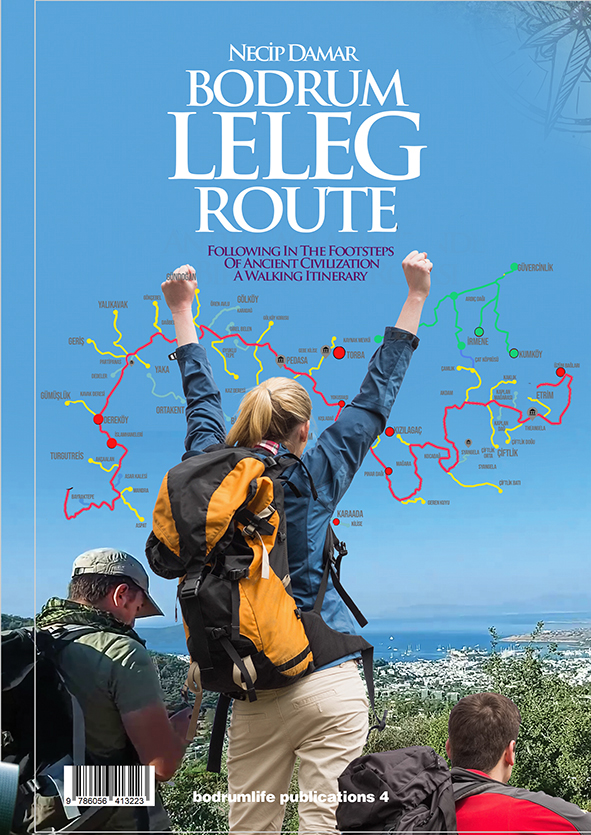
Sandima used to be at the crossroads of a network of ancient walking and stock paths that crisscrossed the peninsula before the age of the motorcar.
One path crossed from the hilltop Geriş village along the ridge to Sandima but that has now been lost as new developers and owners build larger luxury villas above Yalikavak. That ridge-top path continued either over the hills to Yaka and Ortakent a way still navigable or onward to the other mountain village of Dağbelen, and further onward to Gölköy.
It is thought that the paths were first set by the hill-dwelling Lelegian tribes, but today they are the last preserve of hikers fighting a losing battle against development.