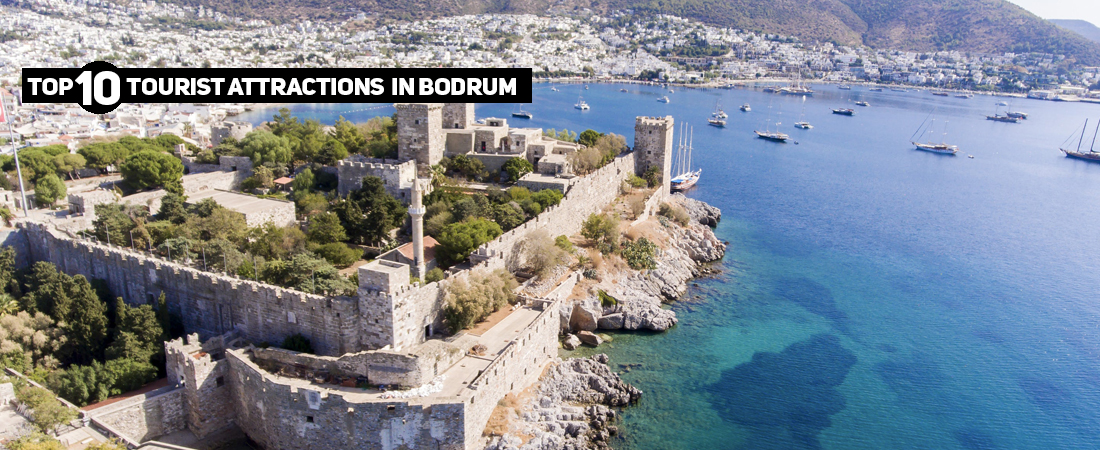
Previous excavations near Muskebi (now Ortakent) identified
human habitation in the Mycenaean Age, ca. 1600 B.C.
More than forty burial places dating back to that time
were discovered and a rich collection of artifacts found
there is now housed in the Bodrum Castle.
Bodrum, then known as
Halicarnassus, was the birthplace of Herodotus
who has been awarded the title of “Father
of History”. Some critics have called him
“Father of Lies” due to a discernible
slant and exaggerations contained in his works.
He was involved in a plot of a coup d’etat
and had to scurry into exile.
|
|
Lelegians and Carians, natives of Anatolia, are the
earliest inhabitants of the Bodrum peninsula to be identified
by name. Carians are specified by Homer in the Iliad
as allies of the Trojans during the Trojan War fought
ca. 1260 B.C. Some historians pose other dates and a
few even continue to question the fact of the war itself.
Partisans of Homer are generally more vocal.
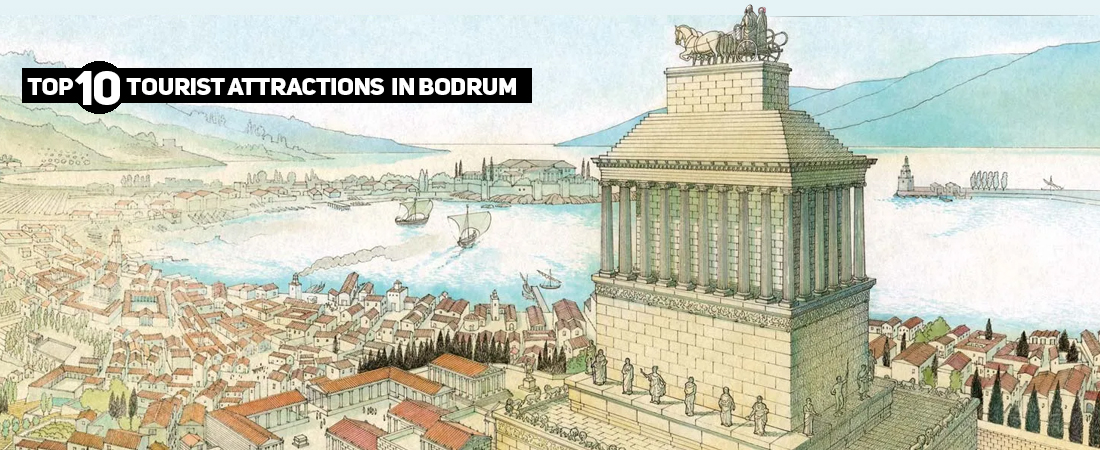
Bodrum was in fact the site of a monumental tomb of
its ruler, Mausolus. The structure, called the “Mausolleion”,
was regarded as one of the Seven Wonders of the Ancient
World and it gave the word “mausoleum” to
many languages. The foundations and some remains of
this memorial can be seen off Turgutreis Street. Major
pieces of statuary were removed to the British Museum
by Charles Newton. For this and other similar services
to the British Crown he became a “Sir”.
Alexander, as a 19-year-old teenager, long before he
was tagged “the Great”, sent a secret emissary
to Halicarnassus to put in a bid to marry a Carian princess,
a niece of the reigning rulers. Philip of Macedon, Alexander’s
dad, threw a fit upon learning of the conspiracy and
exiled some of those involved.
Remember Shakespeare’s “Julius Caesar”?
If so, you’ll recall Brutus and Cassius, the principal
knife-wielders in Caesar’s murder. In the civil
war that followed, this same Cassius kept his fleet
in the harbor of Myndus, today’s Gumusluk, exacting,
none too gently money, materiel and provisions from
the local population to feed and equip his rebels. They
lost.
The town of Turgutreis is named for a native son, Turgut
Reis, a famous admiral of the Ottomans, known as Dragut
in western historical sources.
Throughout history Bodrum was known by various names.
The known ones are Zephyria, Halicarnassus, Mesy, Castrii
Sancti Petri, Petronion, Petrum, Budrum and, finally,
Bodrum. During this long existence its inhabitants included
Carians, Lelegians, Dorians, Lydians, Persians, Medes,
Macedonians, Romans, the Mentese clan of the Seljuk
Turks, Knights of St. John (these were composed of the
English, French, Italian, German and Spanish contingents)
and Turks of the Ottoman Empire and the Republic. Current
residents, in addition to the Turkish majority, include
American, Australian, Austrian, Belgian, Dutch, English,
French, Finnish, German and even Japanese nationals.
First known human habitation on the Bodrum peninsula
- and the first from this era to be discovered in the
Aegean region - occurred in the Chalcolithic (‘copper-stone’)
Age, ca. 5500-3000 B.C. Artifacts, including a stone
ax and pottery, were unearthed in a cave near Gundogan
in 1995.
|